
Articles
Background reading on OSHA compliance and workplace safety: how the rules are made, who they cover, and what they mean in practice.

The Small Employer Exemption: What It Covers and What It Does Not
July 15, 2026With 10 or fewer employees, or in a listed industry, you may skip routine OSHA injury records. Serious-event reporting and written requests still apply.
The Seven Core Elements of a Safety and Health Program
March 3, 2026OSHA's Recommended Practices describe seven core elements of a safety and health program. Here is what each one involves and how to start.
Section 11(c): Protection for Employees Who Raise Safety Concerns
November 6, 2025What Section 11(c) of the OSH Act prohibits, which employee activities it protects, and the 30-day complaint deadline, in the law's own words.
Employee Access to Exposure and Medical Records: What 29 CFR 1910.1020 Requires
August 21, 2025What 29 CFR 1910.1020 requires for employee exposure and medical records: what to keep, for how long, and how fast to give access.
Temporary Workers: What the Host Employer and the Staffing Agency Each Owe
June 10, 2025Who records a temporary worker's injury, who trains, and what the staffing agency should ask about the host site. Regulation and OSHA guidance kept apart.
Multi-Employer Worksites: Who Is Responsible for a Hazard?
March 27, 2025When several employers share a site, OSHA's Multi-Employer Citation Policy defines four employer roles. Here is what each role means and must do.
Posting the OSHA 300A Annual Summary: What to Do and When
January 14, 2025What OSHA's rule requires at year end: review the 300 Log, complete and certify the 300A summary, post it by February 1, and keep it posted until April 30.
What Makes an Injury Work-Related Under OSHA's Recordkeeping Rule?
September 12, 2024How 29 CFR 1904.5 decides if an injury or illness is work-related: the presumption, the nine exceptions, aggravation, travel, and working at home.
Competent Person vs. Qualified Person: What OSHA Means by Each
June 20, 2024OSHA's construction rules define a competent person and a qualified person differently. Here is what each term means and where each one is required.
Recordable or First Aid? Where OSHA Draws the Line
April 9, 2024OSHA's recordkeeping rule has a complete list of 14 first aid treatments. Here is the list, and how it decides what goes on the OSHA 300 Log.
General Industry or Construction: Which OSHA Standards Apply to Your Work?
January 17, 2024How to tell whether a job falls under OSHA's general industry standards (Part 1910) or the construction standards (Part 1926), using the rules' own words.
How to Read an OSHA Standard Number
October 24, 2023What a citation like 29 CFR 1910.147(c)(4)(i) means, piece by piece, and how to find that exact paragraph on osha.gov.
Understanding the New OSHA Recordkeeping Rules: A Comprehensive Guide to Compliance
July 19, 2023OSHA's electronic recordkeeping rule took effect January 1, 2024. What the rule requires of employers in high-hazard industries and why it matters.
OSHA and Safety Training: A Requirement for Workplace Safety in the U.S.
July 17, 2023Does OSHA require safety training? Yes. How training requirements are built into OSHA standards and what types of training employers may need.
The Origin of OSHA Standards: A Key to Workplace Safety in the U.S.
July 17, 2023Where do OSHA standards come from? How the Occupational Safety and Health Act of 1970 created OSHA and how new regulations are written.
Understanding OSHA Jurisdiction: Ensuring Workplace Safety Across the U.S.
July 17, 2023Where does OSHA apply? A plain-English look at OSHA's jurisdiction over private and public sector workplaces, and how state plans fit in.
Silica Exposure in the Workplace: Understanding OSHA Standards and Control Methodology
January 5, 2023Silica dust can cause silicosis and lung cancer. A look at OSHA's general industry and construction silica standards and the controls that protect workers.
OSHA 300 Log: Do It Right The First Time
December 27, 2022What the OSHA 300 log is, which injuries and illnesses belong on it, how long to keep it, and how the Injury Tracking Application (ITA) fits in.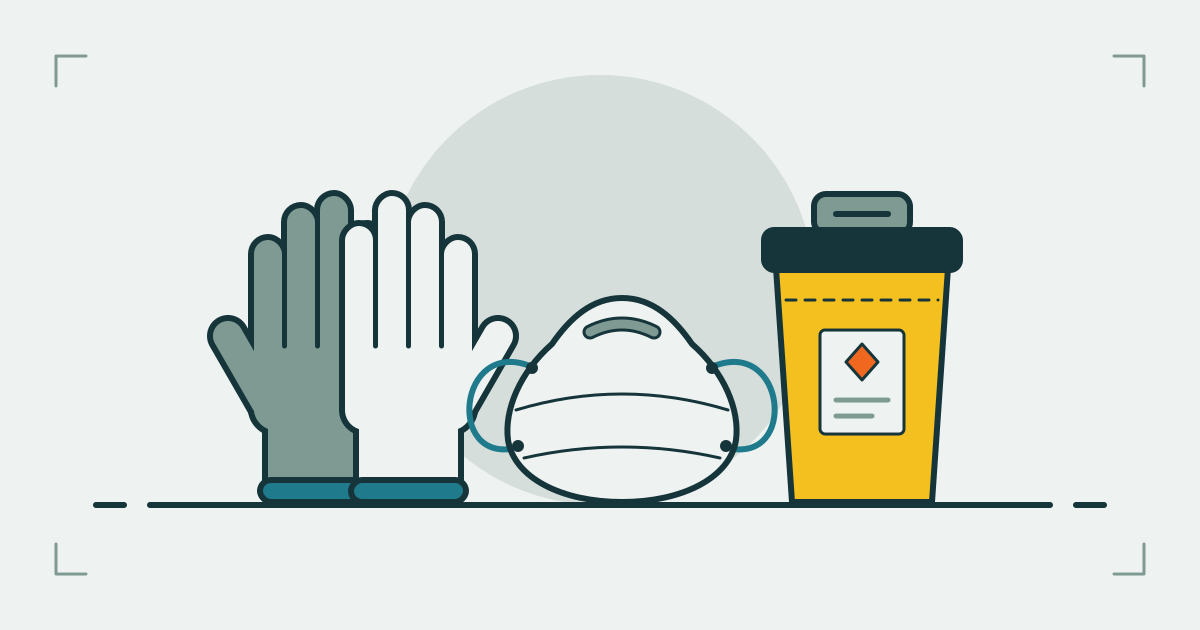
OSHA in Healthcare: Protecting Yourself and Your Patients
December 14, 2022How OSHA compliance protects healthcare workers and patients: personal protective equipment, hazard communication, bloodborne pathogens, and respiratory protection.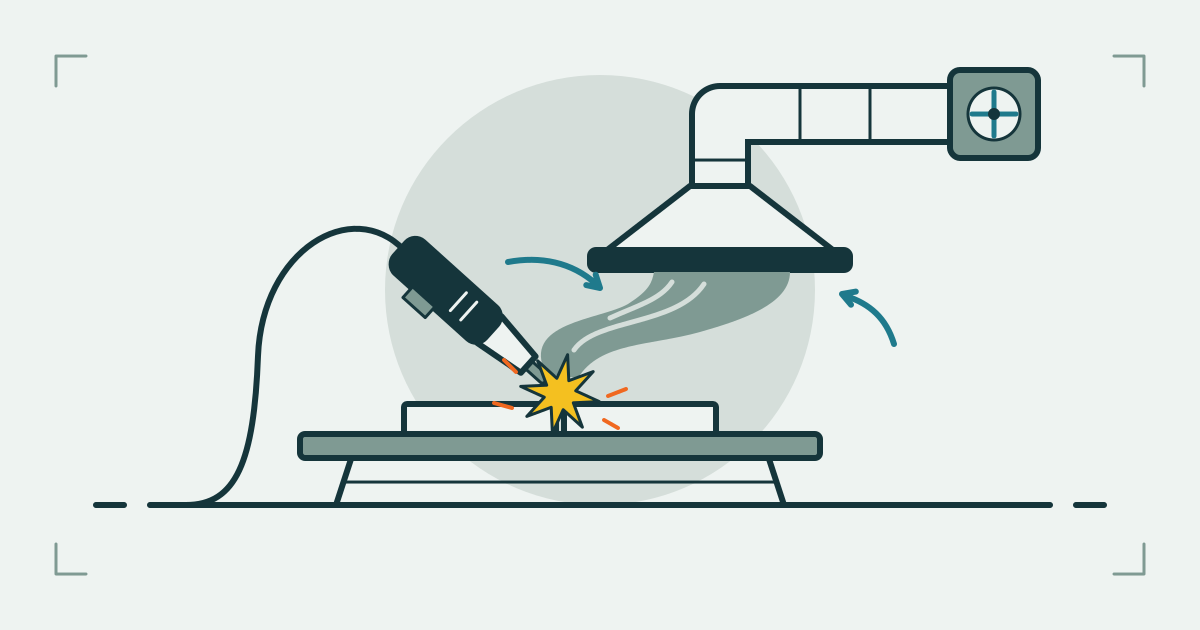
How to Protect Workers from Dangerous Hexavalent Chromium
December 13, 2022Hexavalent chromium is a highly toxic chemical found in industrial workplaces. Here is what OSHA expects employers to do to protect workers from exposure.